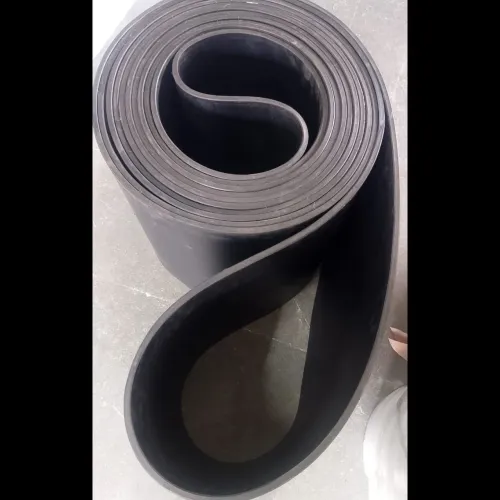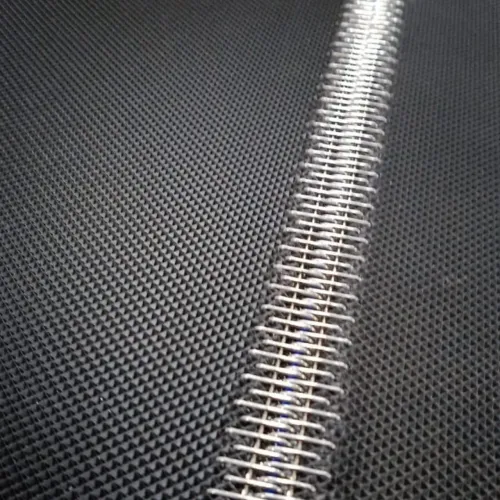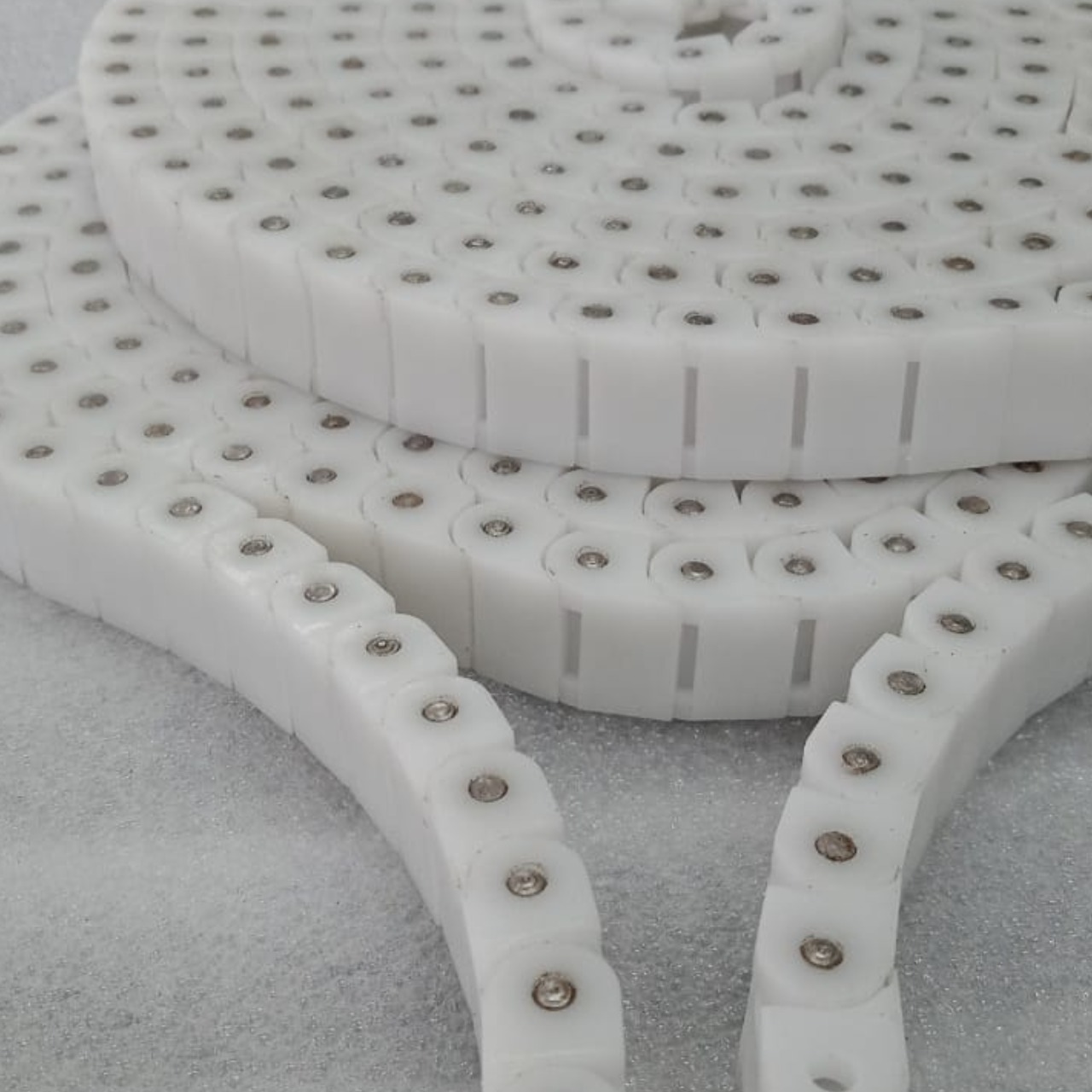
Plastic modular conveyor belts are typically specified by pitch (often 8 mm / 0.32“ up to 63.5 mm / 2.5“), belt width and increments, surface style (flat top, flush grid, rubber/friction top, roller top, cleated), materials (polypropylene, acetal/POM, polyamide/nylon pins), and load/tension ratings.
Core Specification Parameters
• Pitch: Distance between hinge centers; common sizes range from 8 mm (0.32“) micropitch up to 25.4 mm (1“) and 50.8–63.5 mm (2“–2.5“) for heavy loads.
• Width & Increments: Varies by series—from narrow belts around 76–190.5 mm (3“–7.5“) to wide industrial belts over 1, 200 mm (48“+). Modular links typically step in fixed standard increments (such as 12.7 mm, 50 mm, or 76.4 mm) with narrow non-standard trim or link increments.
• Surface & Open Area: Options include closed/solid top, open/flush grid (for drainage and airflow, e.g., ~36%–43% open area on certain radius/grid designs), friction/rubber inserts, flights/cleats, and side guards.
• Materials: Belt modules commonly use polypropylene (PP) (moisture/chemical resistance, lighter duty) or acetal / POM (higher strength, lower friction, tighter wear tolerance), paired with pins in polyamide (PA6.6) or PBT.
• Mechanical & Conveyor Limits: Specified by permissible tensile force / pull force (e.g., around 500–1, 200 N on light/medium conveyor modules depending on curves), max load per drive sprocket, wear-strip spacing (carry vs. return), backflex/curve radius, and operating temperature/food-grade approvals (such as FDA/EU compliance).