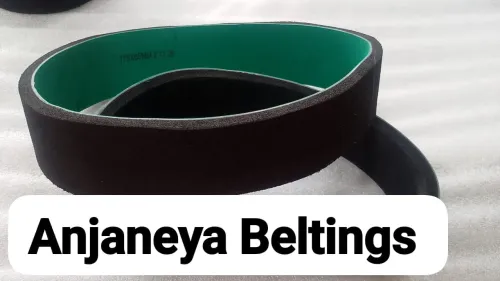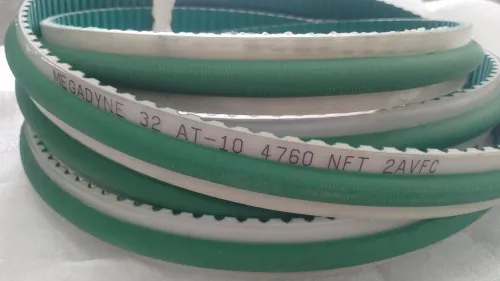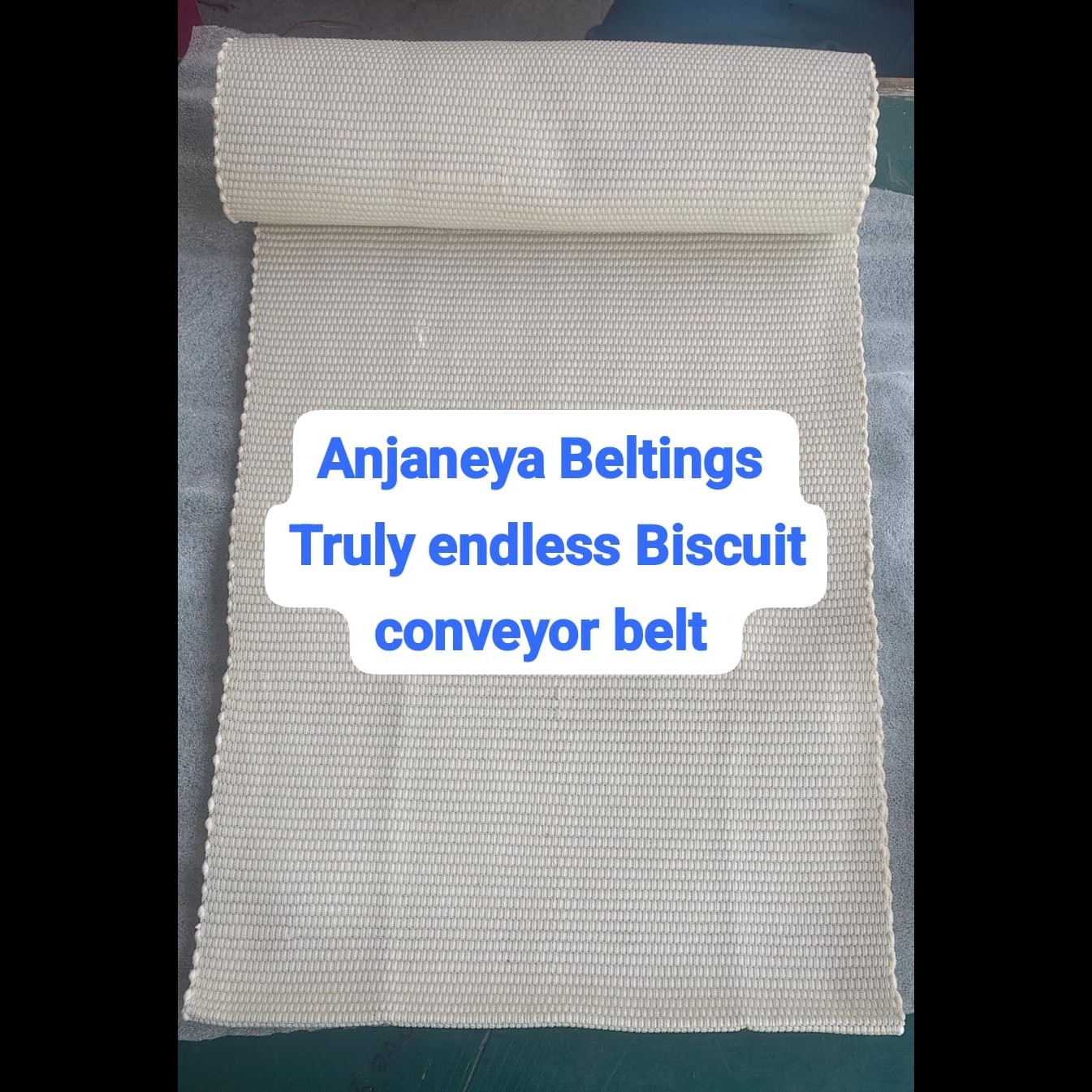
Truly endless woven biscuit conveyor belts are seamless, jointless belts woven in a continuous loop to prevent splice failure, ensure uniform thickness, and support smooth dough transfer or cooling in biscuit lines.
Key Specifications & Variations
• Construction & Seam: Truly endless woven loop with no mechanical or glued splice joint, providing uniform thickness and smooth operation over small rollers or knife edges.
• Carcass & Yarn Materials: Polyamide (nylon), cotton, polyester, flax, or wool, depending on the bakery stage (dough molding, cutting, oven take-off, or cooling). For example, Biscuit People lists a 2.0 mm polyamide endless conveyor band with 24 warp threads per cm for rotary and cutting biscuit processes.
• Thickness: Commonly 1.5 mm to 3.0 mm for biscuit molding, drying, and cooling belts (around 2.0 mm for standard polyamide and canvas biscuit belts), though heavy-duty industrial endless belts can be thicker.
• Width & Length: Widths typically range from roughly 30 to 65 inches (up to ~1, 650 mm) on standard bakery canvas variants, with lengths customized to conveyor center distances.
• Operating Temperature: Ranges widely by material and coating—around 100°C for basic cotton/nylon bakery webs, over 110°C (230°F+) for oven take-off applications, and up to 280°C–350°C for specialized high-temperature synthetic/aramid/coated endless woven belts.
• Surface & Coatings: Available uncoated (absorbent for dough/oil handling) or finished with food-grade PU (polyurethane), PVC, or silicone coatings/impregnations, plus optional bottom tracking guides such as V-profiles.
Application Notes by Line Stage
• Molding & Cutting: Smooth, low-stretch, or food-grade coated/polyamide weaves help release dough cleanly without seam marks.
• Oven Take-Off: Requires heat and baking-oil resistance plus flexibility around small nose rollers.
• Cooling & Transfer: Multi-layer cotton or woven belts handle moisture dissipation and continuous product transport.
Please share your belt width and length, target thickness, operating temperature, and conveyor stage (molding, oven take-off, or cooling) so I can narrow down exact material and coating specs.