Thank you for writing to us. One of our executive will reach back to you through your submitted medium. In case there’s an urgency, feel free to connect over WhatsApp for faster response.
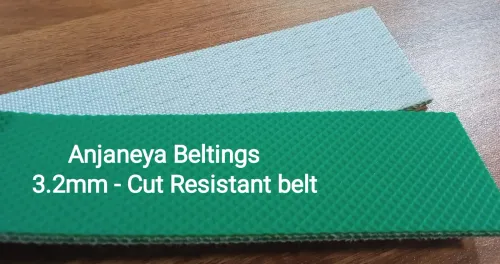
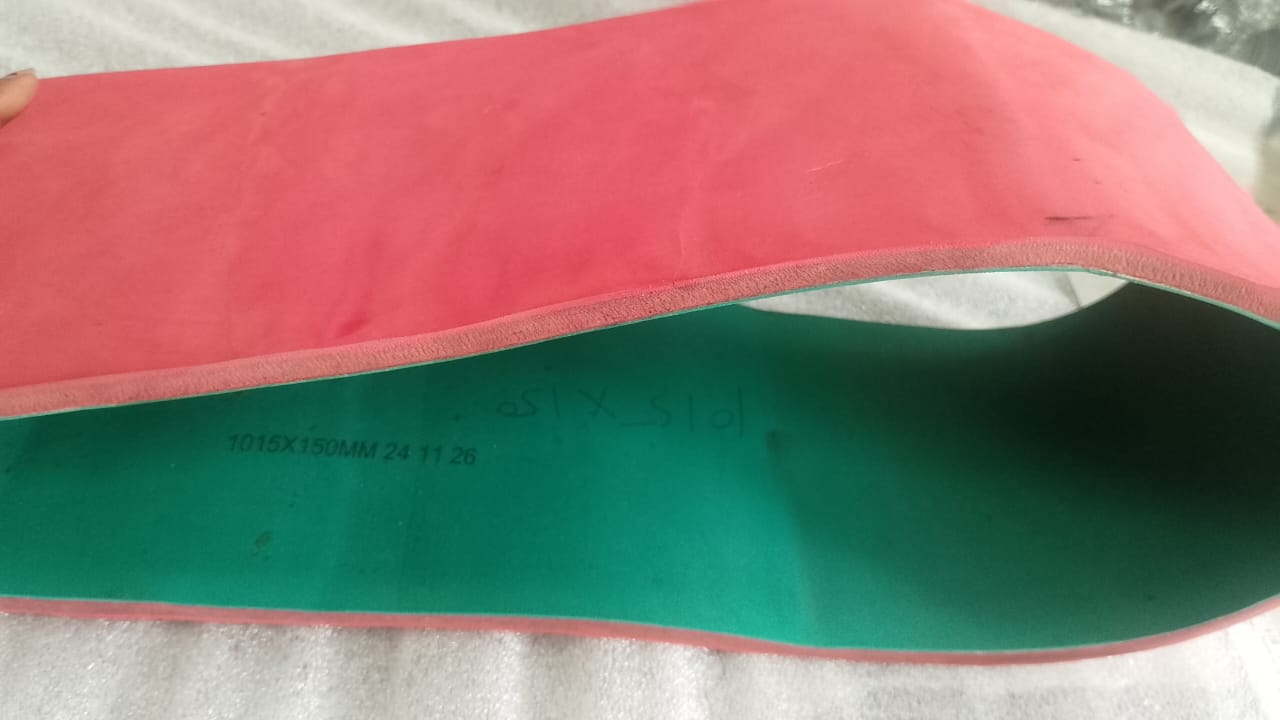
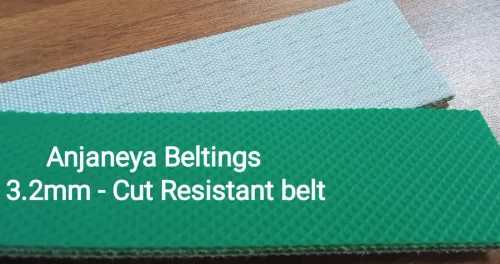
Cut-resistant PVC conveyor belts typically feature a multi-ply carcass (1 to 4+ plies), a 2 mm to 15+ mm total thickness depending on load and impact duty, and higher Shore hardness/stiffer top covers or reinforced compounds to resist slicing, abrasion, and sharp edge
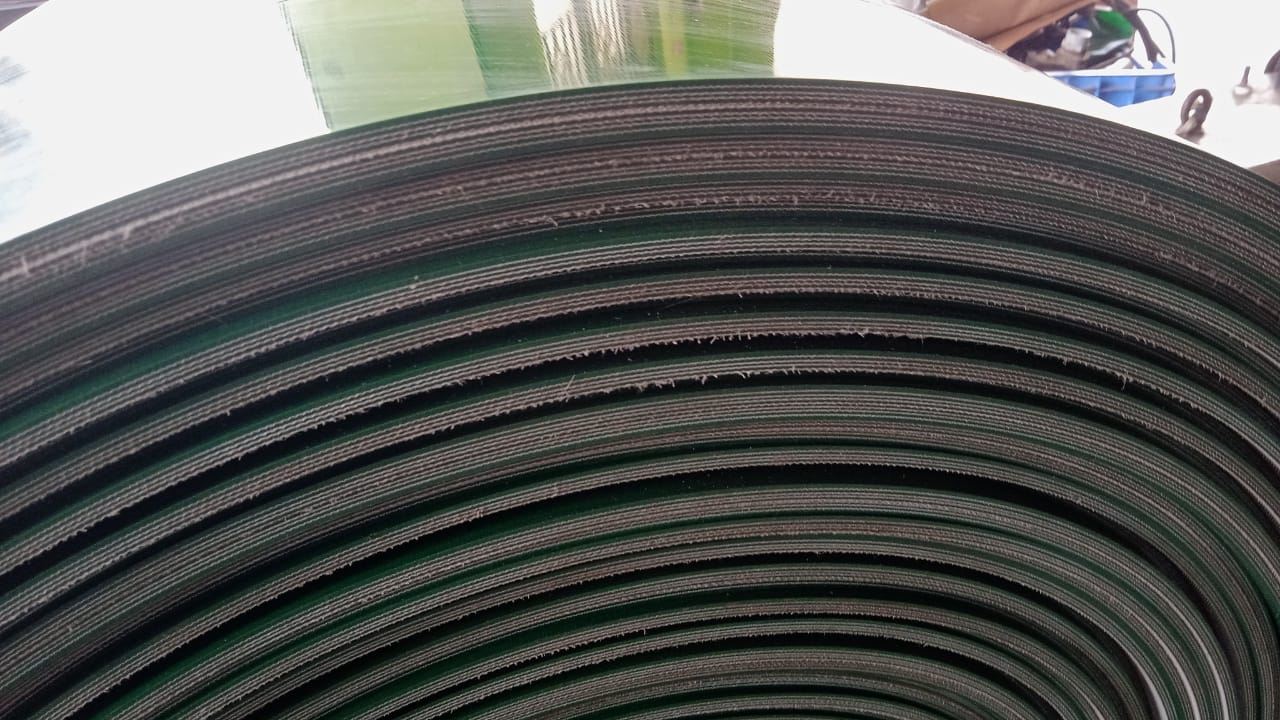
The carcass is the inner reinforcement layer that provides longitudinal tensile strength, load support, and impact resistance.
• EP (Polyester-Polyamide). Polyester warp (lengthwise) and nylon weft (crosswise) deliver very low elongation (1%–2%), high wet strength, and good troughability. This is the most widely used fabric carcass for general and heavy-duty bulk handling.
• NN (Nylon-Nylon). Polyamide in both directions offers high elasticity, superior impact absorption, and flexibility, making it ideal for high-impact loading points.
• ST (Steel Cord). Galvanized steel cables embedded in rubber provide ultra-high tensile ratings (ST500 to ST5400+) and minimal stretch (<0.25%) for long-distance, high-tonnage overland conveyors.
• Strength & Ply Rating. Expressed as Total Breaking Strength (N/mm) / Number of Plies (for example, 630/4 means 630 N/mm full-thickness tensile strength across 4 fabric plies, or 160 N/mm per ply). Common ratings range from 200/2 to 3150/8.
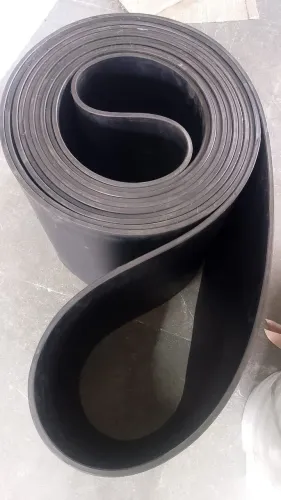
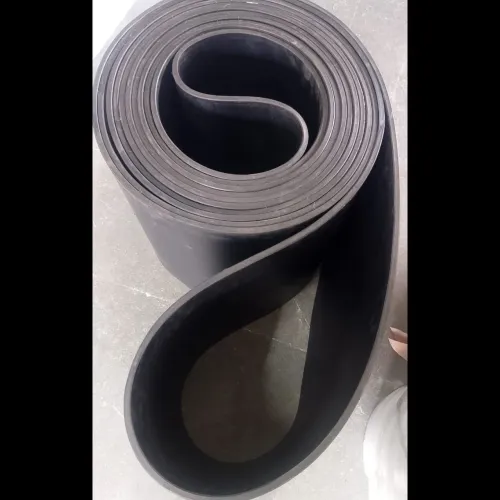
Rubber conveyor belt specifications define the belt construction, tensile strength, dimensions, and rubber cover grades required to safely transport bulk materials under specific operating conditions. A standard single-line belt designation typically looks like 1000 mm EP 630/4 5+2 DIN-Y (Width + Carcass Type & Strength/Plies + Top/Bottom Cover Thickness + Cover Grade).